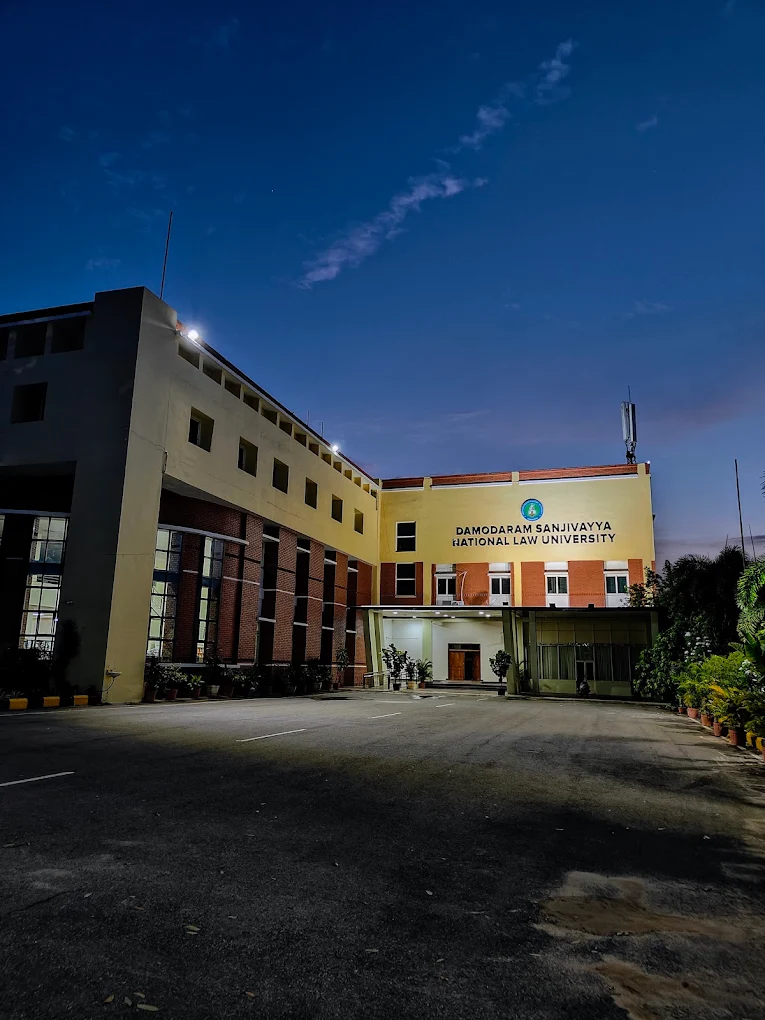
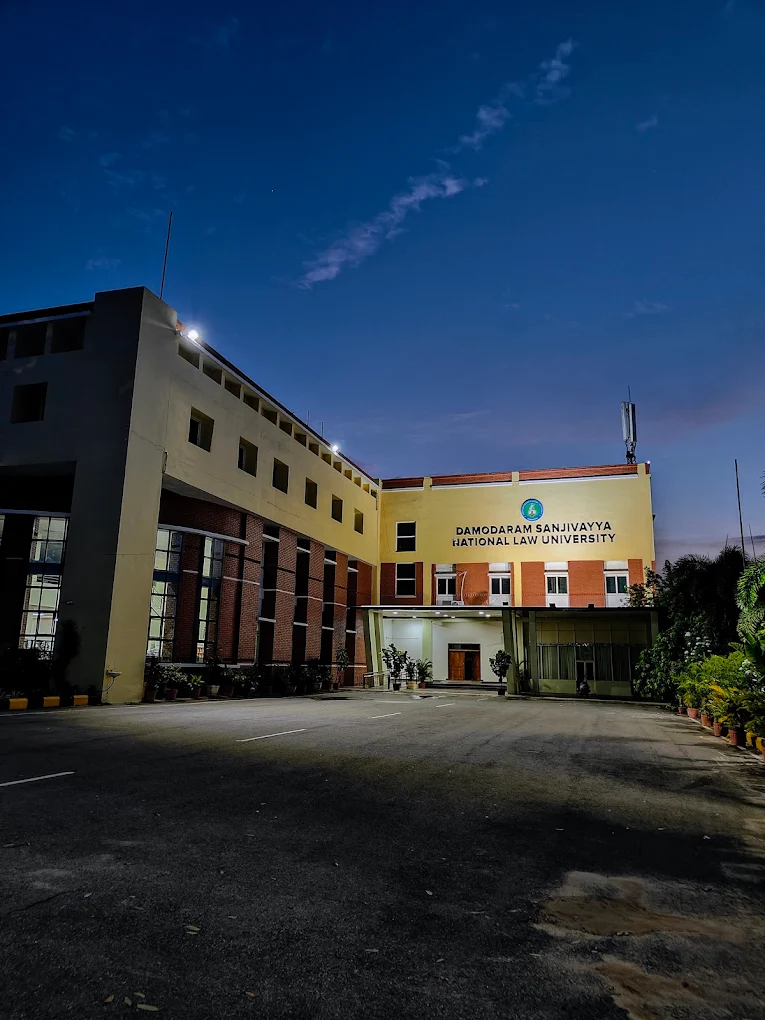
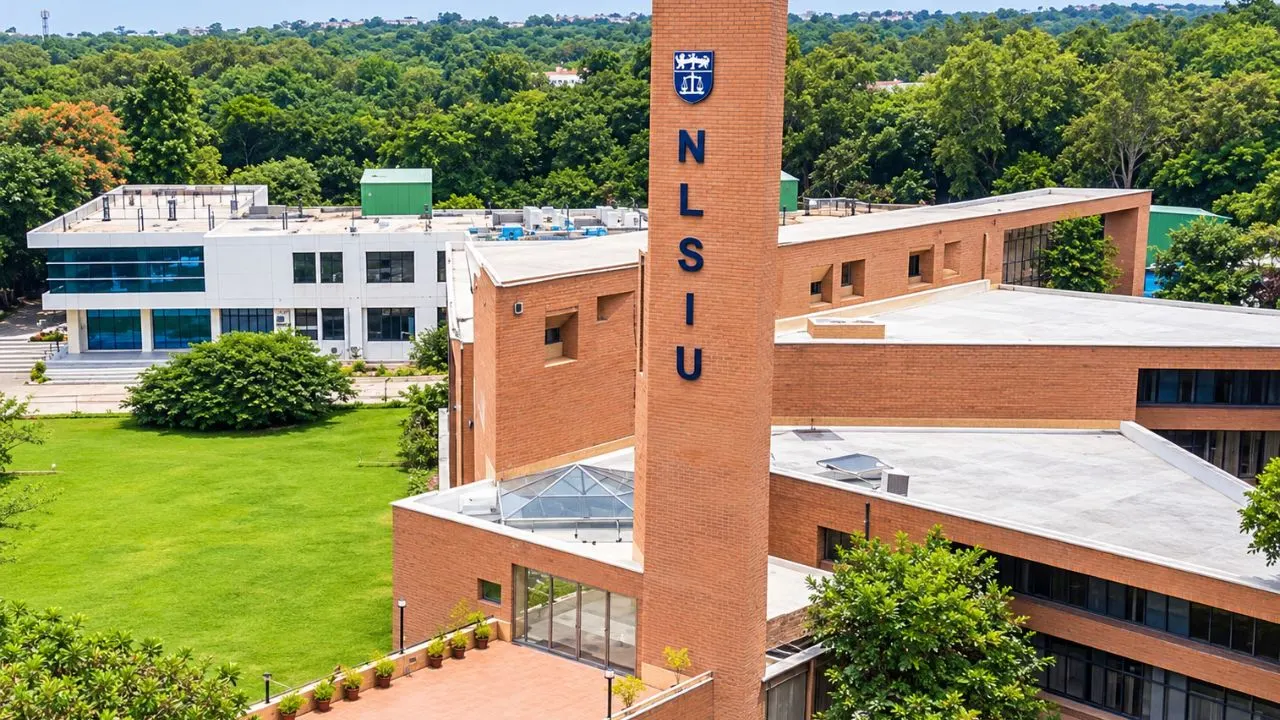
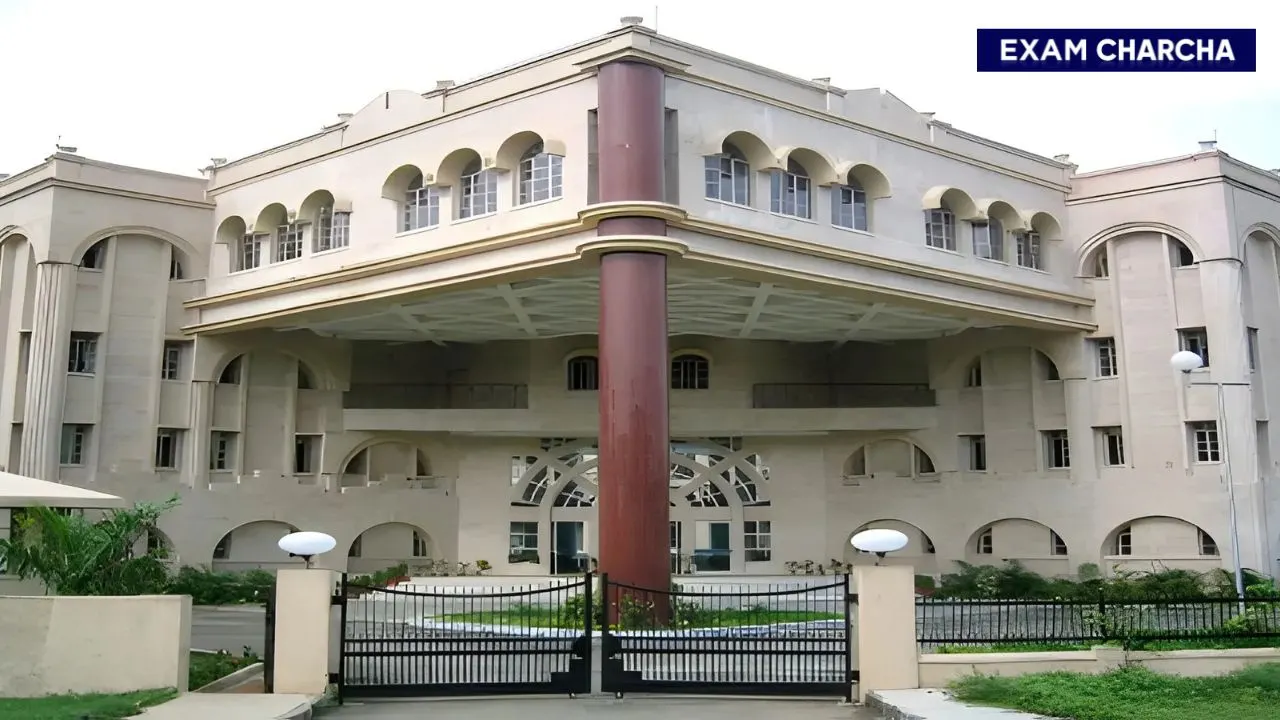
Damodaram Sanjivayya National Law University (DSNLU), Visakhapatnam, is a state law university established by the Government of Andhra Pradesh in 2008. The university offers undergraduate, postgraduate and doctoral programmes in law, including B.A. LL.B. (Hons.), three-year LL.B., LL.M., Ph.D. and LL.D. If you plan to pursue law at DSNLU, you can explore its courses, admission process, eligibility criteria, fees, placements, and campus facilities before making your decision.
- Established: 2008
- Ownership: State University, Government of Andhra Pradesh
- Location: Sabbavaram, Visakhapatnam, Andhra Pradesh
- NIRF Rank 2024: 39 in the Law category
- Courses: B.A. LL.B. (Hons.), three-year LL.B., LL.M., Ph.D. and LL.D.
- Entrance Exams: CLAT UG for B.A. LL.B. (Hons.), CLAT PG for LL.M.; separate admission notification for the three-year LL.B. and doctoral programmes
- Campus: 45.5-acre green campus
Damodaram Sanjivayya National Law University: Complete College Details
DSNLU offers undergraduate, postgraduate and doctoral programmes designed to help you build a strong foundation in legal studies and explore different areas of law. You can review the courses, their duration, eligibility requirements and admission criteria below to identify the programme that best suits your academic goals.
DSNLU Courses
DSNLU offers undergraduate, postgraduate and doctoral programmes in law. You can choose between two undergraduate law programmes. These are the five-year integrated B.A. LL.B. (Hons.) and the three-year LL.B. At the postgraduate level, you can pursue a one-year LL.M. with specialisations in corporate and commercial law, constitutional and administrative law, and criminal law and security law.
|
Course
|
Duration
|
Eligibility
|
Entrance Exam / Selection
|
|
B.A. LL.B. (Hons.)
|
5 Years
|
Class 12 or equivalent qualification with the prescribed minimum marks
|
CLAT UG
|
|
LL.B.
|
3 Years
|
Bachelor's degree from a recognised university, subject to the applicable eligibility rules
|
University-notified All India Entrance Examination
|
|
LL.M.
|
1 Year
|
LL.B. or equivalent qualifying law degree
|
CLAT PG
|
|
Ph.D.
|
As prescribed by university regulations
|
Relevant master's degree and other requirements under the Ph.D. regulations
|
University entrance test and interview, subject to applicable exemptions
|
|
LL.D.
|
As prescribed by university regulations
|
As per the university's doctoral regulations
|
As notified by the university
|
LL.M. specialisations at DSNLU
If you choose the LL.M. programme, you can explore these three specialisations:
- Corporate and Commercial Law
- Constitutional Law and Administrative Law
- Criminal Law and Security Law
The B.A. LL.B. (Hons.) curriculum covers subjects such as constitutional law, criminal law, family law, contract law, jurisprudence, environmental law, intellectual property rights, corporate law and alternative dispute resolution. The LL.M. curriculum includes research methods, legal writing, specialisation papers and a dissertation.
DSNLU Fees
If you are planning to study at DSNLU, you should review the university's fee structure for the 2027-28 academic year. It includes tuition, academic, student welfare, accommodation and other charges for undergraduate and postgraduate programmes. You will also need to pay mess charges separately according to actual expenditure.
|
Fee Components
|
B.A. LL.B. (Hons.)
|
LL.M.
|
|
Admission Fee (one-time)
|
₹3,000
|
₹3,000
|
|
Tuition Fee
|
₹2,10,000 per annum
|
₹2,10,000 per annum
|
|
Academic Fee
|
₹1,00,000 per annum
|
₹1,05,000 per annum
|
|
Student Welfare Fee
|
₹5,000 per annum
|
₹5,000 per annum
|
|
Other Academic Activities Fee
|
₹15,000 per annum
|
₹15,000 per annum
|
|
Internet, Journals and Library Fee
|
₹15,000 per annum
|
₹15,000 per annum
|
|
Building Maintenance, including Electricity Charges
|
₹15,000 per annum
|
₹15,000 per annum
|
|
Infrastructure and Development Fee
|
₹15,000 per annum
|
₹15,000 per annum
|
|
Sports Fee
|
₹5,000 per annum
|
₹5,000 per annum
|
|
Accommodation Fee
|
₹35,000 per annum
|
₹35,000 per annum
|
|
Moot Court Fee
|
₹5,000 per annum
|
Not applicable
|
|
Alumni Fee
|
₹2,000 one-time
|
₹2,000 (as listed in the brochure)
|
|
Refundable Library Deposit
|
₹5,000
|
₹5,000
|
|
Refundable Canteen Security Deposit
|
₹10,000
|
₹10,000
|
|
Total printed in the university brochure
|
₹2,30,000 per annum
|
₹2,30,000 per annum
|
Important fee clarification: The 2027-28 brochure prints an annual total of ₹2,30,000 for both UG and PG programmes. However, the individual fee components listed in the same document do not add up to this total. Before paying your fees, confirm the final payable amount and the treatment of one-time charges directly with the university. The brochure also states that tuition fees increase by 10% in each prospective academic year. Mess charges are additional and are calculated according to actual expenditure.
DSNLU Admission Process
Your admission process at DSNLU will depend on the programme you choose and the entrance examination specified by the university.
- B.A. LL.B. (Hons.): To secure admission to this programme, you must appear for CLAT UG and participate in the Consortium's counselling process. Your seat allotment depends on your CLAT rank, reservation category and the university's admission rules.
- LL.M.: If you want to pursue an LL.M. at DSNLU, you must appear for CLAT PG and follow the prescribed counselling and admission procedure.
- Three-year LL.B.: Admission is based on an All India Entrance Examination, as stated in the university's three-year LL.B. notification. Check the latest admission notice for the examination schedule and application procedure.
- Ph.D. and LL.D.: If you are applying for a doctoral programme, you must follow the university's applicable doctoral regulations and admission notification, including the prescribed entrance test, interview or exemptions.
After receiving an allotment or selection confirmation, you must complete document verification and pay the applicable fees within the notified deadline.
DSNLU Seat Intake for 2027-28
|
Programme
|
Regular Seats
|
Additional EWS Seats
|
Total Seats
|
|
B.A. LL.B. (Hons.)
|
180
|
18
|
198
|
|
LL.M.
|
60
|
6
|
66
|
For the five-year programme, the university's 2027-28 brochure provides for 50% of seats under Andhra Pradesh state rules, 40% on an All India basis and 10% for Foreign Citizens, NRIs and NRI-sponsored candidates. The university also specifies applicable vertical and horizontal reservations. If you are applying under a particular category, refer to the current seat matrix for the exact category-wise distribution.
DSNLU Eligibility Criteria
Before applying to DSNLU, make sure you meet the academic qualifications and minimum marks prescribed for your chosen programme. The eligibility conditions for CLAT-based programmes are governed by the applicable CLAT notification and the university's admission guidelines.
|
Programme
|
Educational Qualification
|
Minimum Marks Required
|
Entrance Exam / Selection
|
|
B.A. LL.B. (Hons.)
|
Class 12 or equivalent examination from a recognised board
|
45% for General candidates; 40% for SC/ST candidates
|
CLAT UG
|
|
LL.B.
|
Bachelor's degree from a recognised university
|
As prescribed in the applicable university admission notification and BCI rules
|
All India Entrance Examination
|
|
LL.M.
|
LL.B. or equivalent qualifying law degree from a recognised university
|
50% for General candidates; 45% for SC/ST candidates
|
CLAT PG
|
|
Ph.D.
|
Relevant master's degree in Law or another eligible discipline
|
55% or equivalent B+ grade, with applicable relaxation under UGC regulations
|
University entrance test and interview, subject to exemptions
|
If you are appearing for your qualifying examination, check the applicable entrance examination and university admission rules to confirm whether you can apply provisionally. For Ph.D. admission, review the latest regulations to understand the eligibility relaxations and exemptions from the entrance test.
DSNLU Cutoff
The DSNLU cutoff is released as CLAT opening and closing ranks and varies by year, category, and programme. The table below presents the General category closing ranks for the B.A. LL.B. (Hons.) programme, along with the expected 2027 range.
|
Year
|
B.A. LL.B. (Hons.) General Closing Rank (AIR)
|
|
2024
|
1,390 (Fifth Allotment Round)
|
|
2025
|
1,682 (Third Allotment Round)
|
|
2026
|
1,400 (Fifth Allotment Round)
|
|
2027 (Expected)
|
Around 1,260-1,540
|
The following table gives you an indicative category-wise reference based on the 2026 fifth allotment closing ranks.
|
Category
|
2026 Closing Rank (AIR)
|
Expected 2027 Range (AIR)
|
|
General
|
1,400
|
1,260-1,540
|
|
EWS
|
2,478
|
2,230-2,725
|
|
OBC
|
2,731
|
2,460-3,005
|
|
SC
|
11,482
|
10,330-12,630
|
|
ST
|
16,344
|
14,710-17,980
|
The expected 2027 closing-rank ranges are estimated by applying an approximate 10% variation to the corresponding CLAT 2026 fifth-allotment closing ranks. These figures are indicative calculations, not official DSNLU or Consortium predictions. Actual closing ranks may change with seat availability, candidate preferences, reservation rules and counselling participation.
Damodaram Sanjivayya National Law University Rankings
DSNLU secured the 39th position in the NIRF 2024 Law category, with a score of 47.94. In the NIRF 2025 Law ranking, the university participated in the ranking exercise but did not feature among the top 40 institutions in the published list.
|
Ranking Year
|
Ranking Framework
|
Category
|
Rank
|
|
2024
|
NIRF
|
Law
|
39
|
|
2025
|
NIRF
|
Law
|
Not in the top 40
|
NIRF evaluates institutions on parameters such as teaching and learning resources, research and professional practice, graduation outcomes, outreach and inclusivity, and perception. When comparing DSNLU with other law universities, consider its ranking alongside course offerings, fees, placements and campus facilities.
DSNLU Placements
If you are evaluating DSNLU's placement opportunities, you should look at both the university's NIRF data and the placement-season reports. According to the university's NIRF 2025 submission, the five-year undergraduate programme recorded 38 placements among 120 students graduating in the minimum stipulated time during 2023-24. The median salary was ₹7.50 LPA, while 23 students opted for higher studies.
|
Placement Particulars (2023-24)
|
Five-Year UG Programme
|
|
Students Graduating in Minimum Stipulated Time
|
120
|
|
Students Placed
|
38
|
|
Median Salary
|
₹7.50 LPA
|
|
Students Opting for Higher Studies
|
23
|
A separate report on the 2025 placement season stated that 37 students from the graduating batch received offers. It reported an average package of ₹8 LPA and a highest package of ₹18 LPA. These figures relate to a separate placement-season report and should not be confused with the NIRF 2023-24 median salary data.
Recruiters reported for the 2025 placement season included Trilegal, India Juris, Dentons Link Legal, TLH Advocates & Solicitors, Cyril Amarchand Mangaldas and Shardul Amarchand Mangaldas. Your placement opportunities may vary depending on your academic performance, internships, skills and the recruitment cycle.
DSNLU Scholarships & Financial Assistance
If you need financial assistance to pursue a law degree at DSNLU, you can explore eligible central and Andhra Pradesh government scholarship schemes. Your eligibility may depend on your category, family income, domicile and academic performance. Depending on the applicable rules, you may be able to apply for post-matric scholarships and other financial assistance schemes offered through government scholarship portals.
DSNLU Campus Facilities
DSNLU has a 45.5-acre green campus at Sabbavaram, Visakhapatnam. If you enrol here, you will have access to a fully air-conditioned academic block, Wi-Fi and LAN connectivity. The university is connected to the National Knowledge Network, with 1 Gbps connectivity.
The campus facilities include:
- Library: You can access print resources and online legal databases and academic platforms, including SCC Online, Westlaw India, HeinOnline, LexisNexis, Manupatra, JSTOR, Cambridge and Oxford resources.
- Classrooms: The classrooms are equipped with LCD projectors, internet connectivity and public address systems.
- Moot Court Hall: You can use the dedicated moot court space for advocacy practice, competitions and related activities.
- Seminar and Conference Halls: These facilities host guest lectures, academic discussions, workshops and conferences.
- Sports Facilities: You can access sports grounds and facilities, including a lawn tennis court and indoor stadium.
- Canteen: The campus has a canteen building with a stated capacity to accommodate around 350 students at a time.
- Other Infrastructure: The campus has an 11 KV substation, two 320 KVA backup generators, a sewage treatment plant and a 350 KW rooftop solar power plant.
You can also explore the university's 18 Advanced Research and Training Centres. These include the Alternative Dispute Resolution Centre, Centre for Corporate Legal Research, Centre for Intellectual Property Rights, Women and Child Law Centre, Centre for Maritime, Admiralty and Navigation Laws, Environmental Law and Climate Justice Centre, Sports Law and Policy Centre, and Centre for Aviation and Space Laws.
DSNLU Hostel & Accommodation
If you enrol at DSNLU, you can apply for hostel accommodation within the university campus. The university provides separate hostel facilities for male and female students. Its campus infrastructure includes boys' and girls' hostel buildings. The university's three-year LL.B. notification describes hostel accommodation with approximately 250 rooms and two students per room.
The 2027-28 fee brochure lists an accommodation fee of ₹35,000 per annum for UG and PG programmes. You will need to pay mess charges separately, based on actual expenditure. Hostel allotment is subject to availability and university rules, so confirm room availability, hostel charges and mess arrangements before taking admission.
DSNLU Student Life
If you choose DSNLU, your university experience will include academic activities, moot court competitions, debates, legal aid initiatives, cultural events and sports. The university encourages you to participate in activities beyond classroom teaching through its student committees and societies.
The Moot and Advocacy Society conducts activities related to mooting, mediation, negotiation, client counselling and mock trials. It also organises the Damodaram Sanjivayya National Moot Court Competition, which invites participation from law schools across the country.
You can explore other student activities through the following committees:
- Legal Services Committee and Pro Bono Club: You can participate in legal literacy programmes and outreach activities in Andhra Pradesh.
- Literary and Debating Committee: You can develop your public speaking and debating skills through events such as VAKTA, the university's intra-varsity debating competition.
- Cultural Activities Committee: You can take part in cultural programmes and celebrations such as Hindi Diwas.
- Sports Committee: You can participate in sports events and activities organised for students.
- Internship and Placement Committee: You can follow internship and recruitment-related activities through the committee.
- Other Committees: The university also has gender sensitisation, anti-ragging, internal complaints and student grievance committees.
You can also participate in national and international seminars, conferences, workshops, parliamentary debates, internships and legal research activities. These opportunities can help you develop communication, research, drafting and advocacy skills.
Notable Alumni
DSNLU's alumni network includes graduates pursuing careers in litigation, law firms, corporate legal departments, judicial and government-related roles, research and higher education. The university also has an Alumni Committee to support alumni engagement and institutional activities.
If you want to explore the university's alumni network, refer to its official alumni records. Individual names and professional designations should be included only after verification from the university to avoid attributing unverified achievements or positions to former students.
Who Should Consider DSNLU?
You can consider DSNLU if you want to pursue legal education at a state National Law University in Andhra Pradesh. It offers a five-year integrated law programme, a three-year LL.B., postgraduate specialisations and doctoral research opportunities.
If you are interested in litigation, corporate law, public law, dispute resolution, maritime law, intellectual property or legal research, you can explore the university's academic programmes and research centres. Its moot court activities, legal aid initiatives and internships also provide opportunities to develop practical legal skills.
Before selecting DSNLU during counselling, compare its CLAT cutoff, fee structure, placement outcomes, hostel availability and location with other universities. You should also confirm the payable fee directly with the university because the 2027-28 brochure's printed total does not reconcile with its individual fee components.
Conclusion
If you are looking for legal education in Andhra Pradesh, Damodaram Sanjivayya National Law University offers undergraduate, postgraduate and doctoral programmes supported by research centres, moot court activities and campus facilities. Its location in Visakhapatnam and its focus on areas such as corporate law, maritime law, intellectual property and dispute resolution make it an option worth exploring. Before making your decision, review the latest admission notification, category-wise cutoff, placement information and confirmed fee schedule.